 |
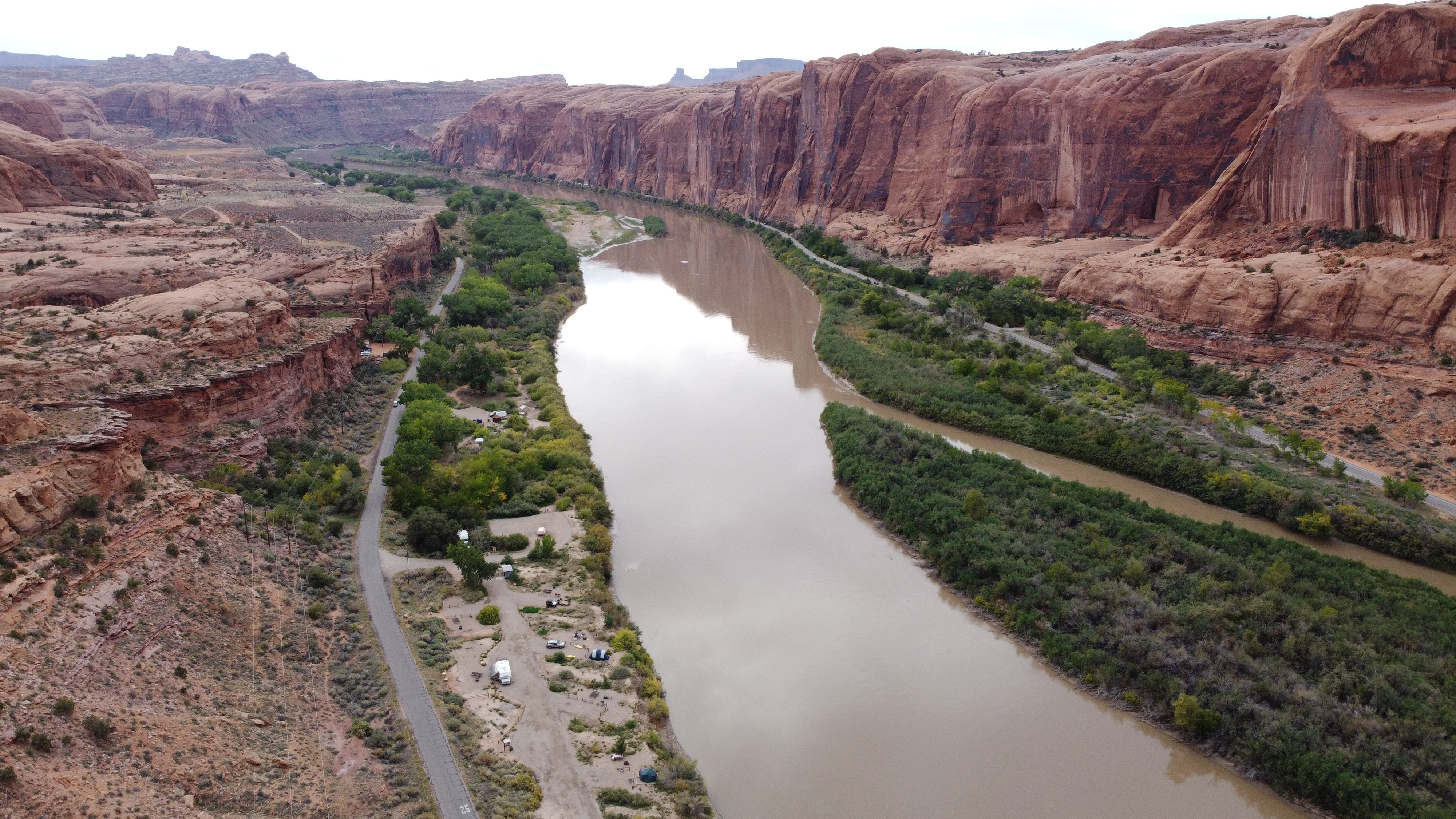
| Aerial view of mile 13 on the course. |
Where to begin on this one. While I haven't nearly begun to truly process what transpired over those 4 days in Utah traversing both mountains and desert terrain around Moab, I figured it's time to put pen to paper or more accurately, finger to keyboard. It had been a year with plenty of ups and downs, both in my health and in my running. I was determined to keep the positive momentum going to the end of the year by finishing my first 200+ miler. My first attempt at the distance at the Bigfoot 200 in August did not go well at all and ended in an early DNF and I wasn't interested in creating a 200 mile DNF streak for myself. After the Tahoe 200 being postponed for the second year in a row (Covid & devastating wildfires), this was going to be my only chance to actually finish the 200 mile distance in 2021. My original goal was the Triple Crown of 200, but after DNFing the first one and the second event being cancelled, I was excited to just get a chance at actually finishing one of the events.
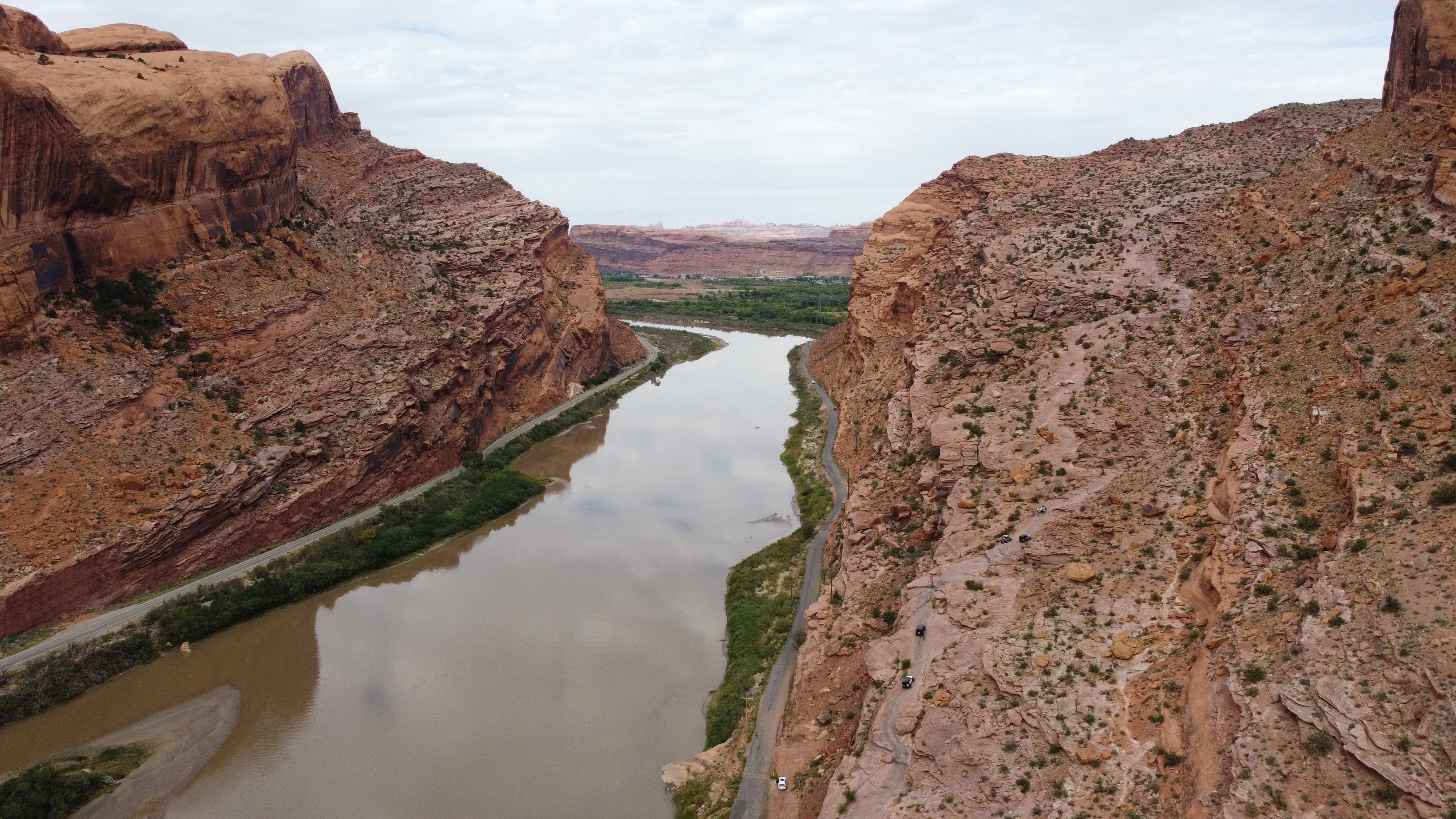 |
| Aerial view looking back at the descent at mile 13 with Moab just behind the ridge. |
I intended to get to Moab the day prior to race packet pickup and to camp at one of the nearby BLM campsites. I had left my camper van on the west coast over the summer in anticipation of the 200s, but when I arrived in town, all BLM sites were already taken. Luckily, I was able to grab a spot at one of the developed RV parks right next to the race start and finish location.

Packet pickup was rather uneventful for me. I didn't really run into any old friends, but that was to be expected considering that I was a long way from my own backyard, nearly 2000 miles to be exact. I checked in with the medical team as is required after picking up my race bib, parking pass and purchased race swag. Afterwards, I quickly made my way to a small local vegan food truck for early dinner, so I could head back to my campsite and van to finalize my drop bags and to get my running kit ready.
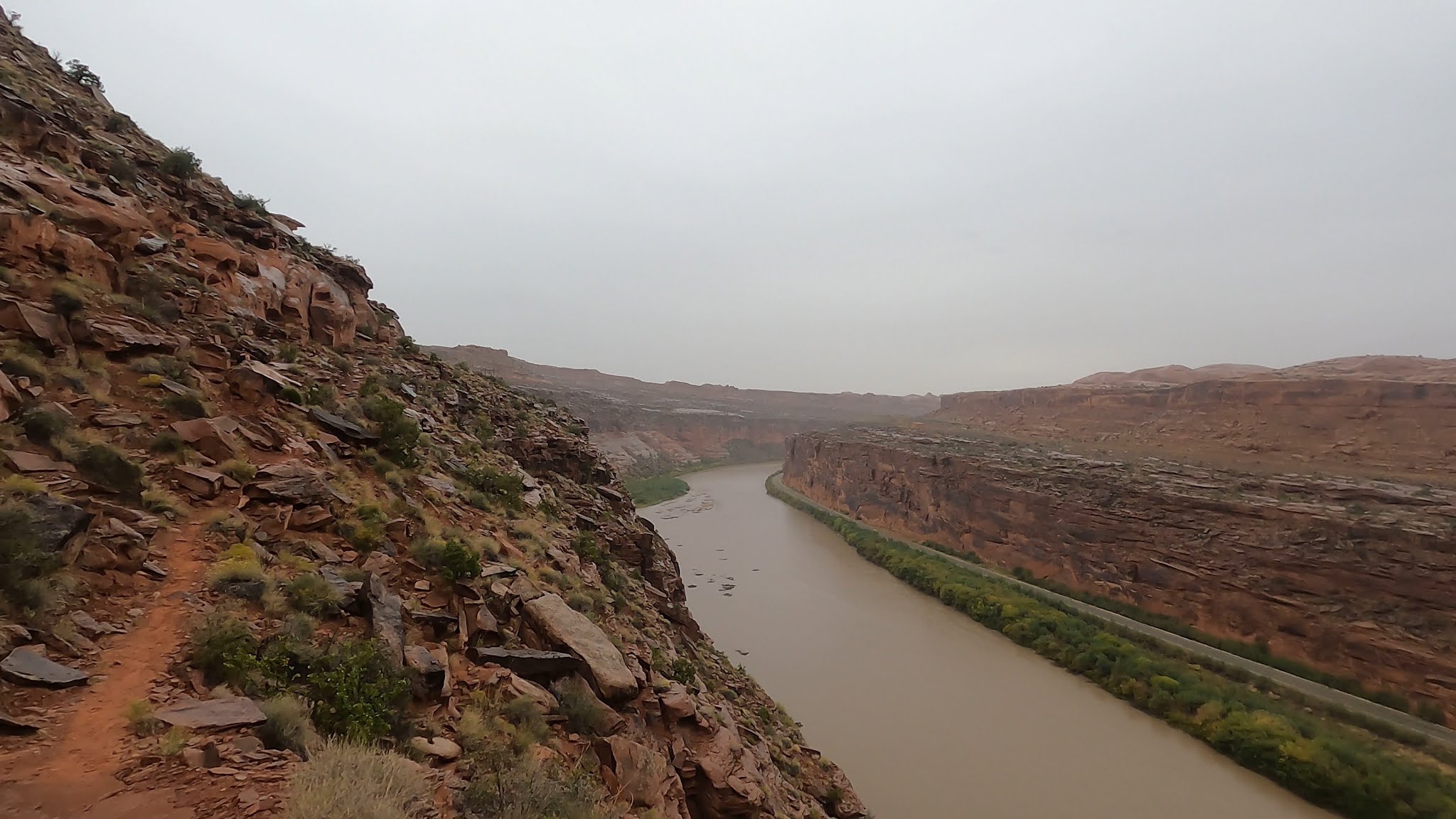 |
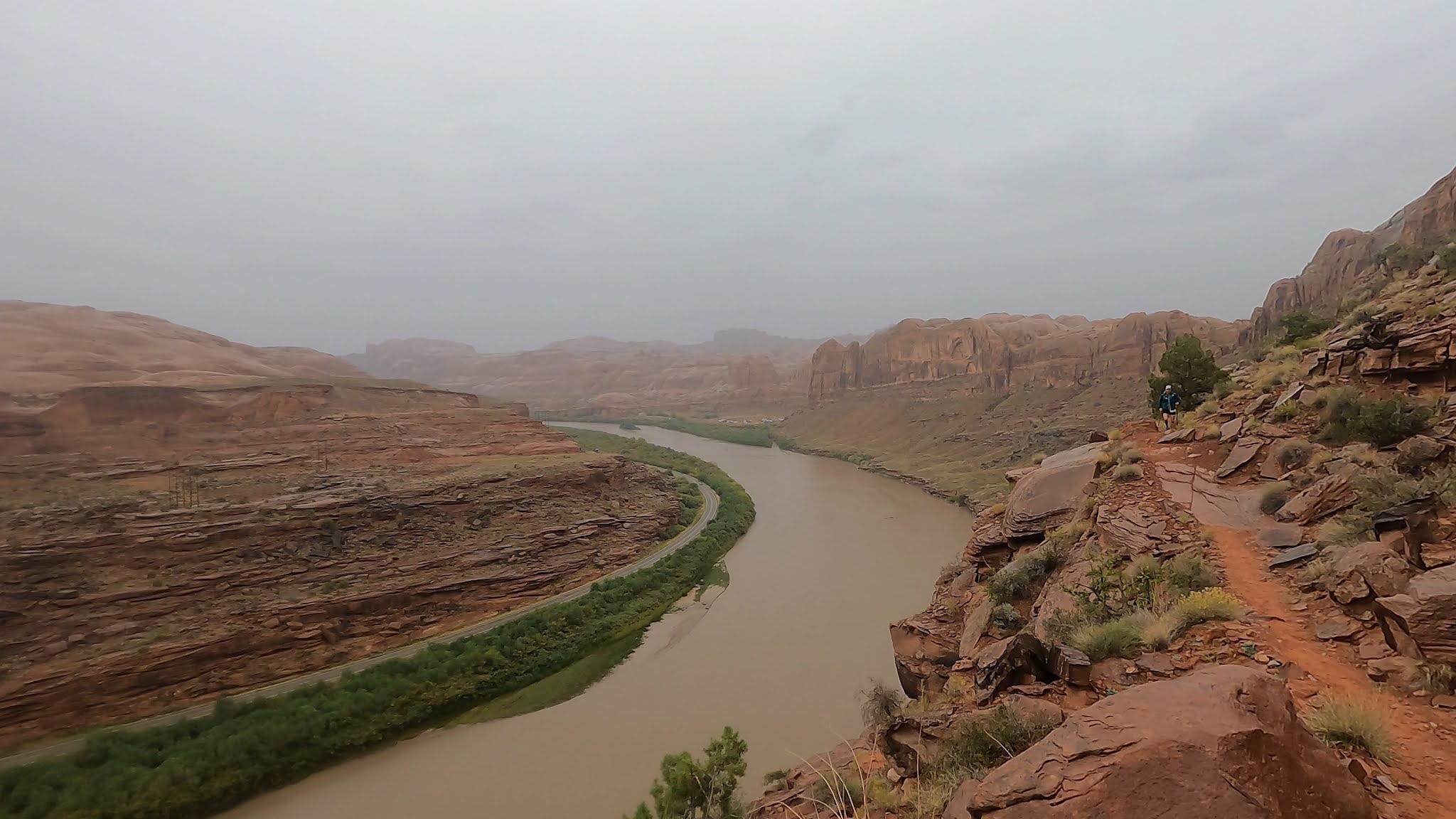
| Single track along the rim overlooking the Colorado river after climbing out of aid station #2 Amasa Back. |
Once everything was packed and ready to go I took one last hot shower as I knew I would have to be without access to one for the next 4 days:-) I laid down early to ensure i was off my feet as much as possible leading into the race, even if I knew I wasn't going to sleep much. Staying close to the race start also allowed me to sleep an extra thirty minutes or so as my plan was to get there as close to the actual race start as possible.
 |
| Looking back on the course around mile 19. |
The race was scheduled to start at 6AM on Friday, so very similar to the usual start times for other ultras. I had set my alarm for 4:30AM on race morning, but I was up by 4AM. I started my day by making a pot of coffee and by taping my feet. This is when I realized I did not have enough tape, so I could only tape my heels. Next up, lube and guess what...I had grabbed the one empty Squirrel's Nut Butter Stick rather than any of the new ones from home. I was now two for two in regards to pre-race mistakes. Oh well, I thought, I might as well get ready for more of this over the next 4 days. I fully expected numerous unexpected challenges and problems to be solved and running was the least of the things I would worry about.

I left the campground at 5AM and pulled into the overnight parking lot for runners 5 minutes later. I finished my morning coffee, grabbed my race pack, stashed my van keys and walked the quarter mile to the race start. I was dark, but the energy was palpable. There were more than just a few camera crews there to document various runners' journeys and lots of phones and cameras were flashing. Lots of faces reflected both excitement and anticipation of the unknown. After a brief "pep talk" by RD Candice Burt, we pushed closer to the start line under the start/finish arch and waited on the signal to go. At 6AM, we took off into the (still) dark streets of Moab, Utah.

The first 9+ mile stretch to the Hidden Valley aid station took us through the streets of Moab for about 3 miles before we hit single track and started our first (albeit minor) climb towards and past the aid station. I tried to settle into an easy pace from the get go as this would be one of the most important tactical decisions to finishing a race of this distance, along with a solid nutrition and sleep strategy, of course. But even more important than either of these strategies would be my ability to accept challenges as they arose during the race and to adapt to them. As a famous boxer (Iron Mike) once said: "Everyone has a plan until they get punched in the mouth." I had learned that first hand and quite literally as a teenager and in early adulthood as a kickboxer and it applies just as much to running long distances, especially when running 100 miles or more, even if less literal and more metaphoric. In the words of my friend and fellow ultrarunner Paul Morris: "Success in ultrarunning isn't so much about running as it is about solving problems." These are the things I think about when getting ready for and starting any event of 100 miles or longer and the Moab 240 was no different.

As I started to make my way up and along the single track trail above Moab, the sun started to rise allowing us runners to turn off our headlamps. Before I knew it, I saw the first aid station just below us and a short descent later, I wolfed down an avocado sandwich, refilled my bottles and continued on. It is worth noting that all aid stations, but especially all of the early ones had a really nice variety of food items, including plant-based choices. As a result, I ate real foods from the start and supplemented it with the real food (i.e. Spring Energy gels) that I had stashed in my numerous drop bags to keep extra weight in my pack to a minimum. Pack weight can be a real issue, so it is really important that one plans very carefully as the combination of mandatory gear, large amounts of fluids and food can add up quickly to a very heavy pack. Thankfully, the temperatures initially thought to approach tripe digits never really crept much higher than the 70s. As a result, some of us were able tog et away with carrying a lot less fluids and water than otherwise recommended.

The next stretch to Amasa Back aid station at mile 18 was quite memorable as well, with bits of technical single track followed by some more runnable stretches and a memorable slick rock section overlooking the Colorado River as we descended towards a 2 mile road stretch to Amasa. I had been in this area earlier in the year while camping and running a 50K just outside Moab (Red Hot 55K), but was unable to get a camping spot this time around as they were all already taken. I did, however, check out the area the day before the race to get some drone footage. Just before I started the descent to the river, it started to drizzle a bit. 30 minutes later, it had turned to a steady drizzle, which led me to put on my waterproof prior to leaving the Amasa Back aid station. Once again, the volunteers were amazing and the spread was plentiful.

The next section had us descending to a small creek before starting a climb headed to the top of a rim along the Colorado River on the Jackson Trail, a single track trail that would eventually send us to the top of and down Jackson Ladder (aka Jacob's Ladder). Our next stop and respite would be Basecamp aid station at mile 33, just over 50K into the race. It is worth mentioning that after the first two aid stations of the race, the sections between aid stations would be anywhere between 15-27 miles. Considering the slower pace of an event of this distance, that meant excruciatingly long stretches of time without any additional food, water and often without much interaction with any other humans. This was particularly tough during the overnight stretches.

Once I made it to Basecamp AS, I made sure to refill both my bottles and my hydration bladder as we had a 25 mile stretch ahead of us with only a water stop in between. I also made sure to eat a couple of tortilla/avocado rollups. This next stretch was probably my best or second best one of the race, but I had made a mental mistake. An unexpected spectator had called out my placement in the field a few miles back and I was sitting way higher in the field than I had expected and of course that messed with my head, if only for a short time. However, it was long enough to have me push juuust a little in this section and while I arrived at mile 57 Oasis aid station (formerly Breaking Bad AS) feeling great, the wheels came off ever so slightly on the next section between mile 57 and Indian Creek aid station at mile 72. I did get a great mental boost coming into Oasis as my good friend Jay and his buddy (and soon to be good friend of mine) Brian ran this aid station. Jay and I met just a few months earlier crewing and pacing a mutual friend of ours at Badwater and Jay had suggested that he may be bale to crew/pace me for the last 50 miles or so at Moab, if I wanted the help. Of course I did, but to be honest, I didn't really expect him to be able to, so I planned with lots of drop bags just to be save. Imagine my surprise when he confirmed that he and Brian would join me to crew and pace me as soon as they could once they closed down Oasis AS. I was stoked about these news and as would become clear later on, I desperately needed their help and support. As many ultrarunners know, it is not about having someone hand you your supplies or dragging your butt along the course, it is much more about seeing a familiar and friendly face and having someone listen, give you that little nudge or reassure you when you need it the most.

It started to get dark just after I left Oasis AS and as the sun went down, so did my energy. I started to feel the first 60 miles and as a result, I reached my lowest point of the entire race over the course of the next 12 miles. I went from a decent running pace to a shuffle to a power hike to a slow walk. And as my pace slowed my mental fortitude waned just as quickly. By the time I arrived at Indian Creek for my first planned "rest break", I was pretty much determined to quit. I say pretty much, because I wasn't willing to hand in my GPS tracker and take off my race bib just yet. Instead, I went through the motions of getting refueling and changing into warm dry clothes (that I had stashed in my drop bag along with a sleeping bag) to try to get a short nap. All the while I was pretty sure I was done for good. I kept chatting with volunteers and medical staff as I continued to eat and drink to try to get my energy levels back up and to see whether it would have an effect on my current mindset. It did not, but I decided to try to get some rest before making any final decisions. I was nearly a day ahead of cutoffs, so there was no reson to rush to any decision. I asked a volunteer to wake me in 3 hours and crawled into one of the tents to get some rest. I nodded off pretty quickly, but just an hour later, I was awake again, my mind spinning and still not agreeing to continue on. I laid there staring at the tent ceiling for another two hours before climbing out of the tent and grabbing one of the chairs near the propane fire pit. I usually consider sitting down by a fire the kiss of death in an ultra and I never do during a 100 miler, but this situation was different.
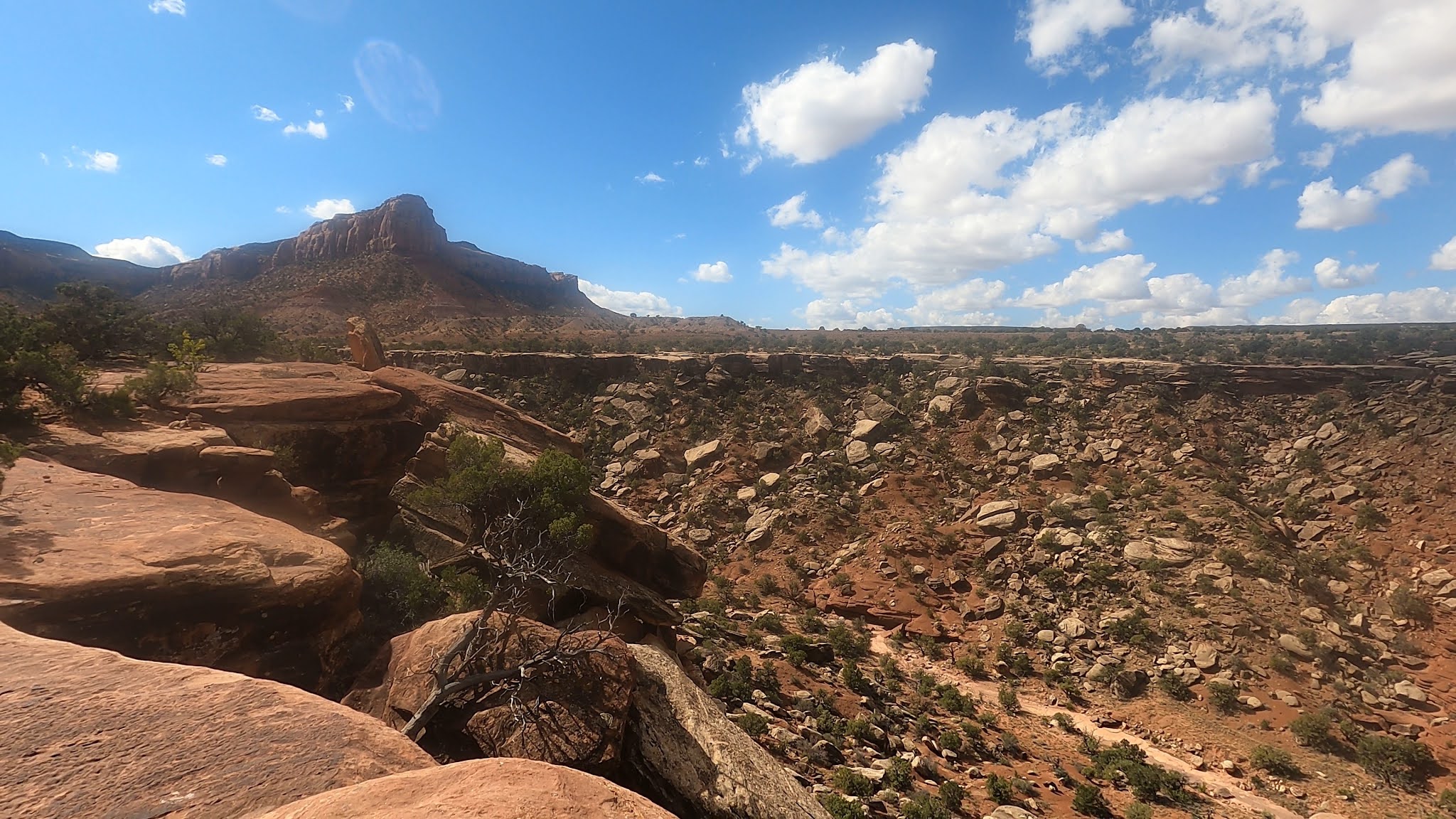 |
| Canyon between The Island and Bridger Jack aid stations, somewhere between miles 87 and 102. |
After sitting by the fire for another 30 minutes or so, I made my way back over to the food and medical tent. I went through the motions of getting my pack ready, still not convinced I would continue. Then I asked Nicole, one of the amazing medical staff to check my feet and tape them as needed for any hotspots or blisters. Even if I didn't continue, it would hurt to take care of my feet. I kept telling myself: "You might as well go through the motions...". Nicole checked my feet, confirmed that there were no blisters and reapplied tape as needed to address hotspots. By the time Nicole finished taping my feet and I finally took of my warm pants and jacket, I had spent nearly 6 1/2 hours at Indian Creek AS. It was now 4AM and I finally made a deal with myself. Make it to the next checkpoint and then decide, if you want to go on. No more, no less. No massive commitments to finish the whole thing, just the commitment to make it to the next aid station. I stuck to that commitment for the remainder of my Moab adventure.

When I finally left the Indian Creek aid station with full bottles, fuel and a secret stash of candy (courtesy of my favorite medic Nicole), I bumped into another runner, Marc, and we decided to stick together for a while. Turns out, we kept each other accountable and moving through the next 24 hours or 50 miles, all the way up and down Shay Mountain, both the most challenging and coldest part of the course for us. Thanks again Marc for the encouragement and company through those hours and miles.

Marc and I made our way to the Island aid station at mile 87. This stretch of the course consisted of some black top running as well as some easy dirt road type stuff. we rolled into the aid station together, but I ended up leaving just before him, sure that he would catch up with me shortly after, which he did eventually. I think I ended up arriving at Bridger Jack aid station just past the 100 mile mark shortly before him, but I decided to take my time to recharge before tackling the 20 mile section leading up to the Shay Mountain aid station at mile 121, the second highest point on the 2021 course after Pole Canyon AS coming up at mile 185. Both Marc and I took our time and I even tried to take a short nap, unsuccessfully.

As we continued on and finally approached the climb up Shay Mountain, I didn't really know what to expect. Just having completed UTMB 4 weeks earlier, I figured, how bad could this climb really be? Well, I got my answer over the next hour, both before and after the false summit. This climb was both technical and steep, reminding me of a couple of the late grinds at UTMB. Marc and I finally made it to the Shay Mountain aid station round midnight. We decided to try to get some proper sleep up here, he in his crew vehicle and me in one of the tents, before meeting up again to lave the aid station at 4AM sharp. I spent about 45 minutes eating and taking care of somethings before grabbing some warm clothes again from one of my drop bags and crawling into one of the tents for 3 hours. I had asked one of the volunteers to wake me at 3:30AM, so I would have enough time to get dressed, use the bathroom and eat some more before heading out again. Unfortunately, the volunteer somehow forgot about me. Luckily, I woke up on my own 2 minutes before 4AM after getting a full 3 hours of sleep. I scrambled to get out of my sleeping back and back into my running clothes. I had wisely shoved them into the bottom of my sleeping bag to keep them warm and dry them out, an old trick I learned from backpackers. When I finally stumbled out of the tent, I started calling Marc's name into the darkness. The only light was a propane fire pit and a couple of headlamps, not nearly enough light for me to recognize anybody. Since it was already past 4AM, I figured Marc had left. I decided to take my time, to use the bathroom and to refill my bottles and nutrition from my drop bag. The gels at the aid station were frozen. Temps had actually dropped below 30 degrees. I decided to get moving before I could get cold.

As I shuffled through the parking lot just past the aid station lined with crew vehicles, I heard someone shout my name. Marc thankfully was running late as well, so we managed to leave the aid station together just as we has originally planned. I had a pacer ready to join him, but since it was just a couple of ours until daylight, he chose to join his pacer at the next aid station, Dry Valley at mile 140. I was starting to get cold and since it was mostly downhill for the next 20 miles, a light shuffle felt appropriate. Unfortunately, shortly after leaving the aid station, Marc's back seized up and he needed to sit down to try to stretch it out. I, on the other hand, was getting cold quickly, so I made the choice to continue on without Marc in hopes that he would catch up to me like he had before. I also knew that he had a crew and pacer waiting for him at the next aid station, so I felt confident that he would be ok.

The 3 hours of sleep had felt great and as the sun came up, I felt even more energized. By late morning, I finally rolled into the Dry Valley aid station and was excited to see that both Jay and Brian were there to greet me. From this point forward, I would have both crew and a pacer at all times for the remaining 100 miles. They sat me down and handed me an oat milk latte with a nice bowl of quinoa and fresh fruit...and a donut!
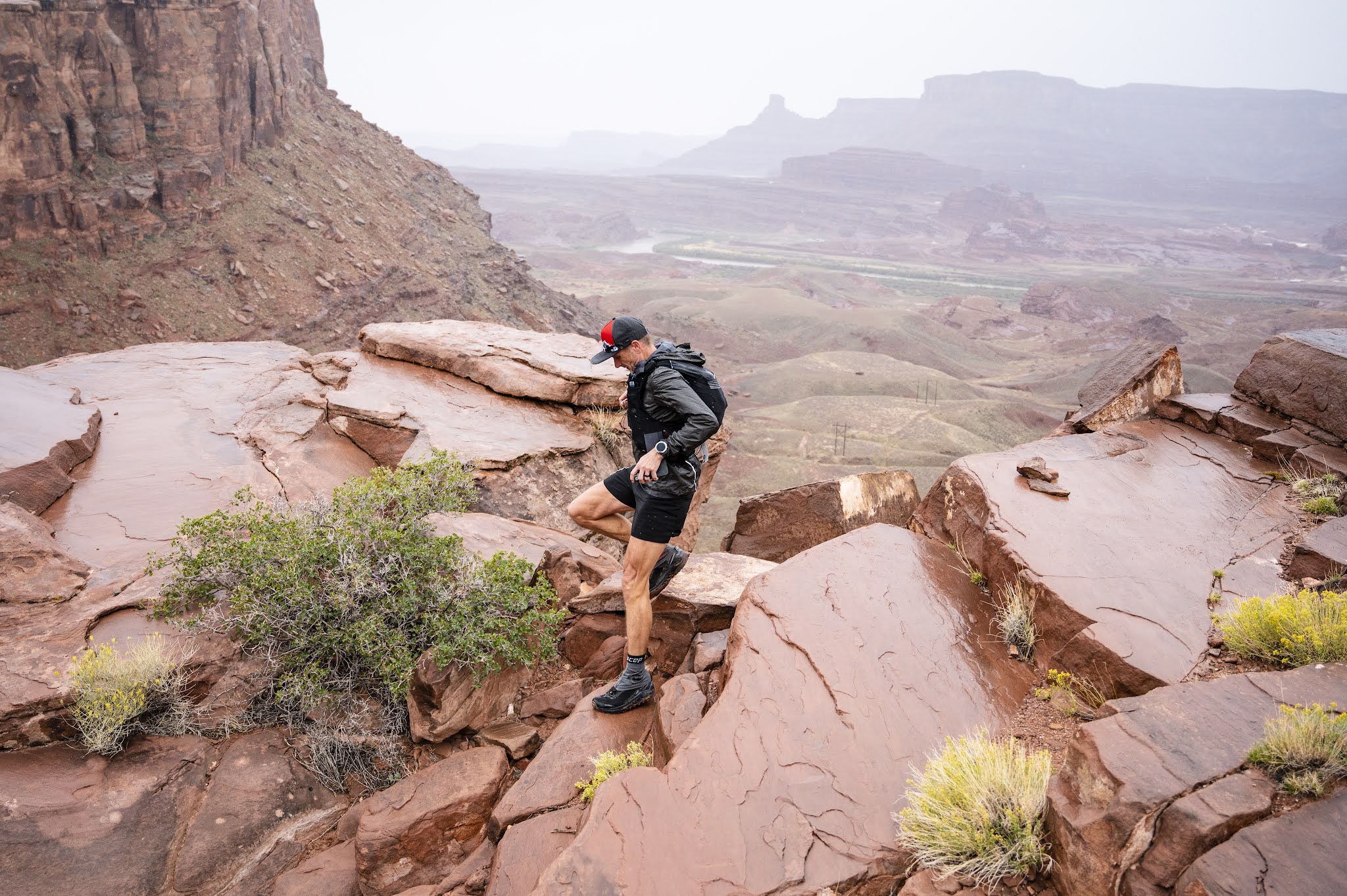 |
| At the "entrance" to Jackson's Ladder descent. |
From here on out, I had a kick ass crew and pacer. Jay and Brian and above and beyond to keep me moving and in good spirits, and believe me, I didn't always make it easy for them to keep a positive attitude. I owe these guys more than just gratitude and hopefully, I will be able to show them just how thankful I am in the future, either by repaying the favor or by other means. These guys were true rockstars!

Brian was the first to join me as pacer. We had a long stretch of mostly flat and hard packed dirt roads ahead of us. I felt a bit guilty of not running as much as I really wanted to, but the distance I already covered started to show. We had a half marathon to cover to make it to Wind Whistle AS and then on to Road 46, where we would meet up with Jay again for the first time since the Dry Valley AS, more than a marathon since we saw him last. Had I had more energy, I would have loved to run much more than I did. Regardless, my mind was already trying to wrap its head around the highest point of the snow route course that lay ahead, Pole Canyon AS at mile 185 at an elevation of just below 9000 feet.
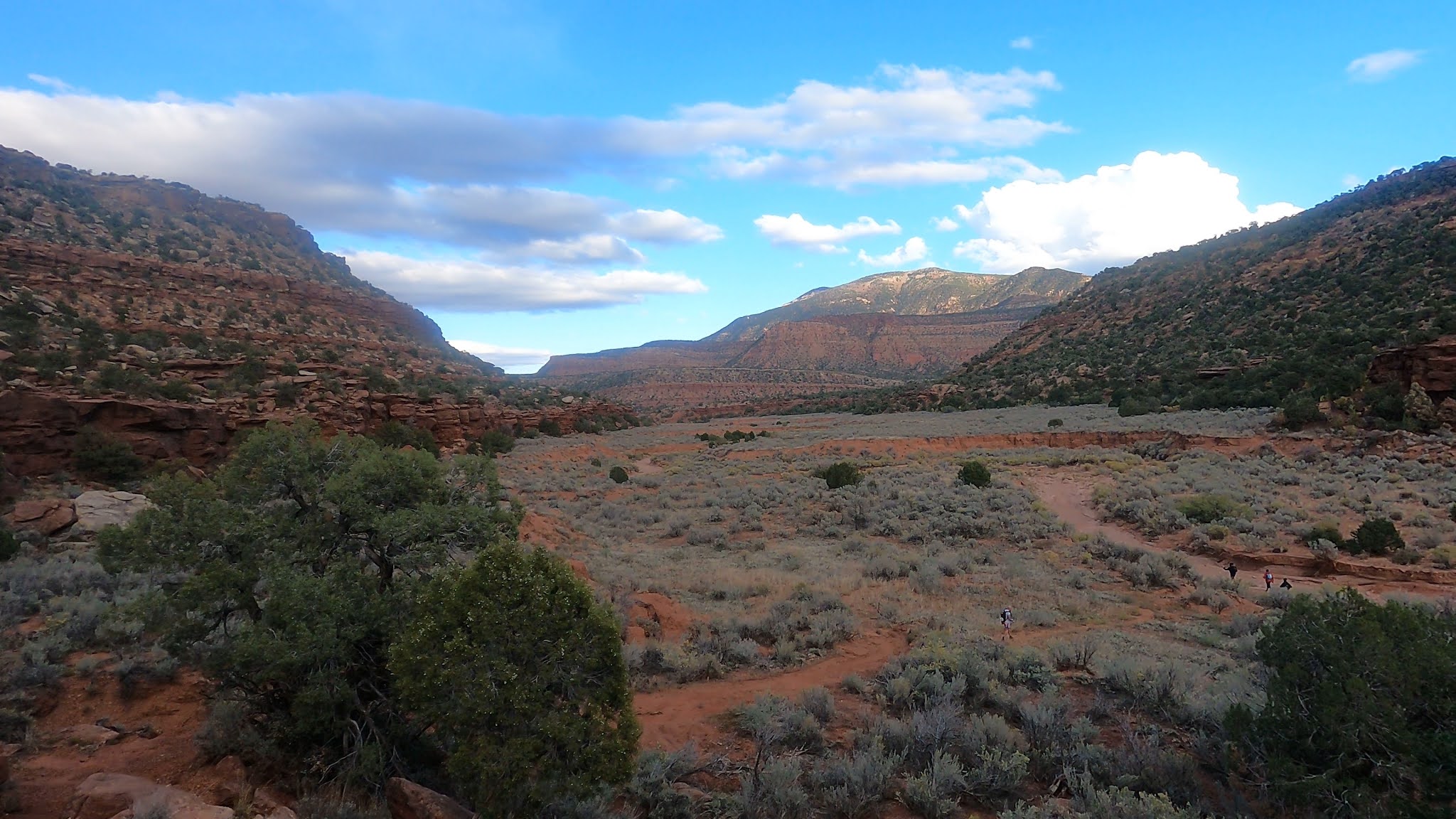 |
| Arriving at the bottom of Jackson's Ladder. |
I was glad to finally arrive at Road 46 AS. I decided to try to get some sleep before the final big climb of the race. It was still early in the evening, but the sun had gone just before we arrived at Road 46. This was one of the busiest aid stations on the entire course. Lots of crew had set up basecamp here waiting for their runners just ahead of the final climb. That said, there would be one more climb (an unexpected 7 mile road climb to mile 207 as part of the rerouted course), but I didn't know that at the time. Jay had set up a table with food for me when I rolled into Road 46. The plan was to refuel and to lay in the back of the truck as quickly as possible to try to sleep for an hour or so. Unfortunately, all I managed was to lay awake for 90 minutes until I finally gave up. It was now Jay's turn to accompany me as pacer for the next 30 + miles, up and over Pole Canyon through the night and well into the next day.
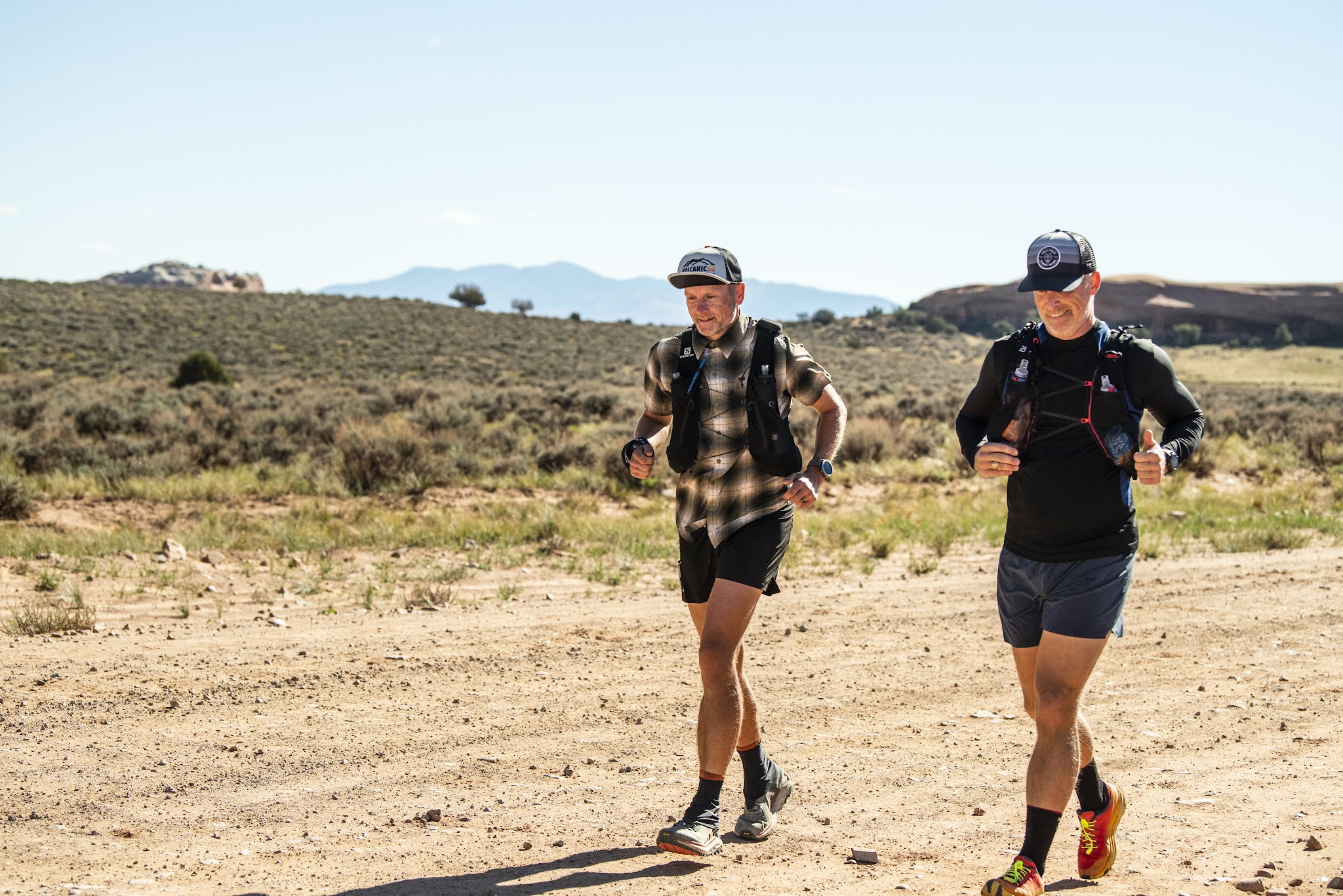 |
| After picking up my (unexpected and much appreciated) pacer Brian Baraniak at Dry Valley aid station at mile 140. |
I don't remember much of the climb up to Pole Canyon AS, but I do know that I did not struggle with the sleepies at all. I was tired, of course, but I wasn't falling asleep on my feet or even sleepwalking. Instead, I dealt with some hallucinations, but even those were few and far between, as I don't even have vivid memories of them as is usually the case. When we finally made it to Pole Canyon AS, it felt amazing to have completed another major milestone of the course. It was somewhere between 1 or 2 AM when we arrived and we spent about 3-4 hours there, to recharge. The aid station was amazing! There was a full made to order menu with pancakes, veggie dogs, hashbrowns, you name it, they served it up hot and made to order. I ordered twice, before and after I tried tog et another nap in, once again unsuccessful. However, i did learn that just getting off your feet was as important as actually sleeping.
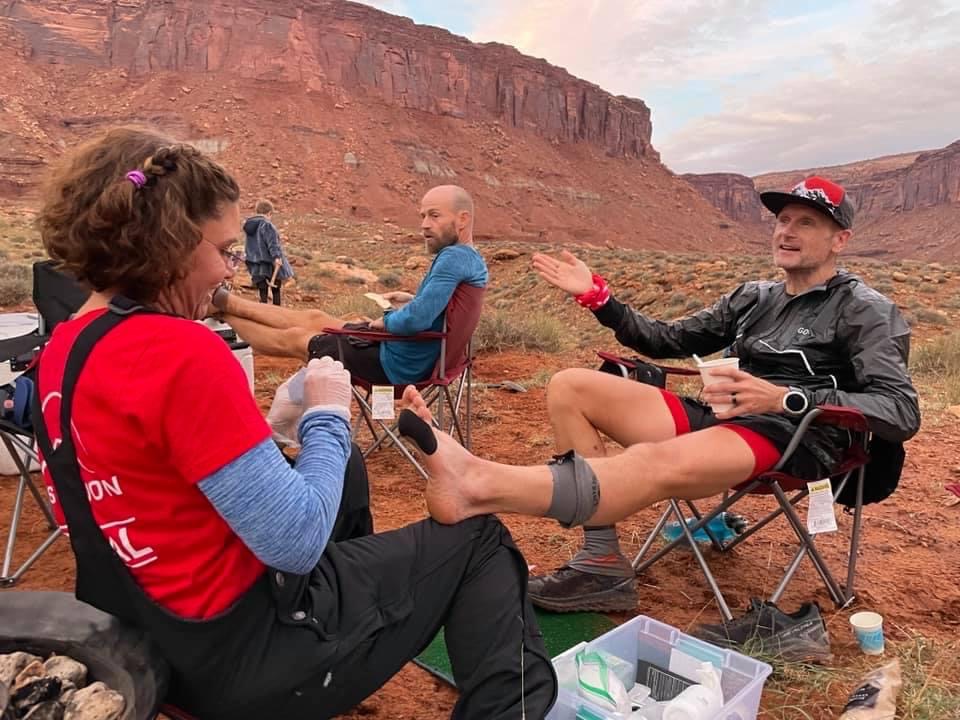 |
| Telling stories while getting my feet retaped at Wind Whistle aid station. |
Jay and I finally left the aid station right at sunrise, which treated us to the most spectacular display of fall colors, yet. We enjoyed the first couple of miles of the descent just taking on the amazing views before getting back to work. While this section to the next water stop was a nearly 20 mile descent, I didn't move much faster downhill than uphill. This section had one of the most technical sections of the entire course, boulder like rocks without a clear path for miles and miles beating up your feet even more than they already were. There are a couple of expletive laden video clips of this section floating around Facebook that are actually really funny. I had some choice words for this section myself.

When Jay and I finally made it to the bottom of the descent, we came through a section was was clearly hit hard by somewhat recent wildfires. It is unreal how much devastation a wildfire can cause and how far and unpredictable wildfires cur their paths. The weather was changing and the severe storms that had been forecast started to form. Wind gusts had become severe and we could see snow storms at the higher elevations of the La Sal Mountains. When we arrived at the water stop we crouched down behind the unmanned aid table, grabbed some candy bars and refilled our water bottles before starting the 7 mile road climb to the next aid station. There were only 2 more aid stations to come and I was starting to "smell the barn". I was determined to finish this climb as fast as possible. Using my trekking poles, I actually felt like I was making good time. I caught up to a couple of runners and didn't get passed along the 7 mile stretch.
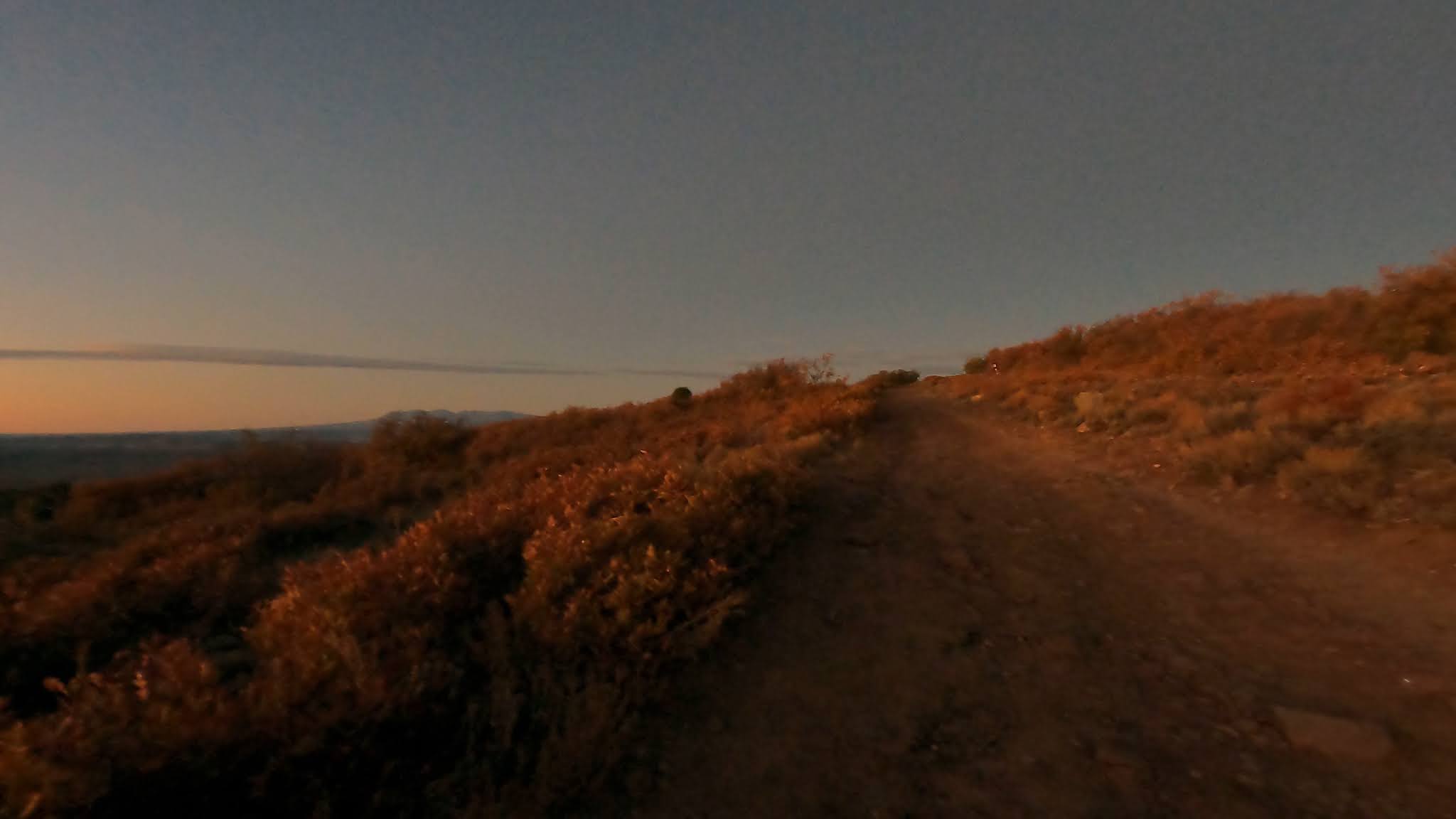 |
| Sunrise at 8500 feet just after leaving Pole Canyon aid station. |
Jay kept encouraging me and I was actually quite optimistic at this point. But I'm not gonna lie, that wind really sucked. When we finally made it to Brian and the truck, I was happy to grab some food and lay down in the truck for a few minutes to rest my body (and feet, in particular). I was also ready for some fresh clean clothes. Not to be too graphic, but the liner of my shorts was covered in diaper rash ointment, so a fresh pair of shorts and shirt sounded fantastic. By the time I climbed out of the truck to get ready, I was surprised to see Jeff Browning hanging out as he was waiting for one of his coached runners. It was great to catch up with him and I am thankful for the intel he shared with mer regarding the remainder of the course. How did he know the course you ask? Well, he had already finished pacing Mike McKnight, the winner of the Moab 240, to the finish line, so the course was still very fresh on his mind.

It would now be Brian's turn to pace me through the next section before jay would take over again for the final stretch along Porcupine Rim and to the finish. According to Jeff, the next section would be very runnable and as it turned out, it really was. I had my second best stretch of the race right here. In fact, I was moving so fast that Jay never got a chance to get some rest before we meet him again at the final aid station. As a result, Brian would be "stuck" with me all the way to the finish line.

If the last section was my second strongest of the race, the final stretch was my worst. At least until we had about 4 miles left to the finish. Porcupine Rim all but broke me. I took a short break at the final aid station, but when we started tog et going again, I felt worse than I had in a while. My body felt fine, but my feet were aching and that didn't go away until the last 4 or 5 miles. Brian was a trooper. I bitched and moaned almost the entire time...until we hit a section that finally seemed to lead down towards Moab. This gave me a final boost. I started running the still technical single track and I started to pick up my pace. I even started passing runners as I built more momentum. I kept pushing and finally, we got dumped out onto a paved bike path. We still had about 2.5 miles to go, but I was almost done, almost.
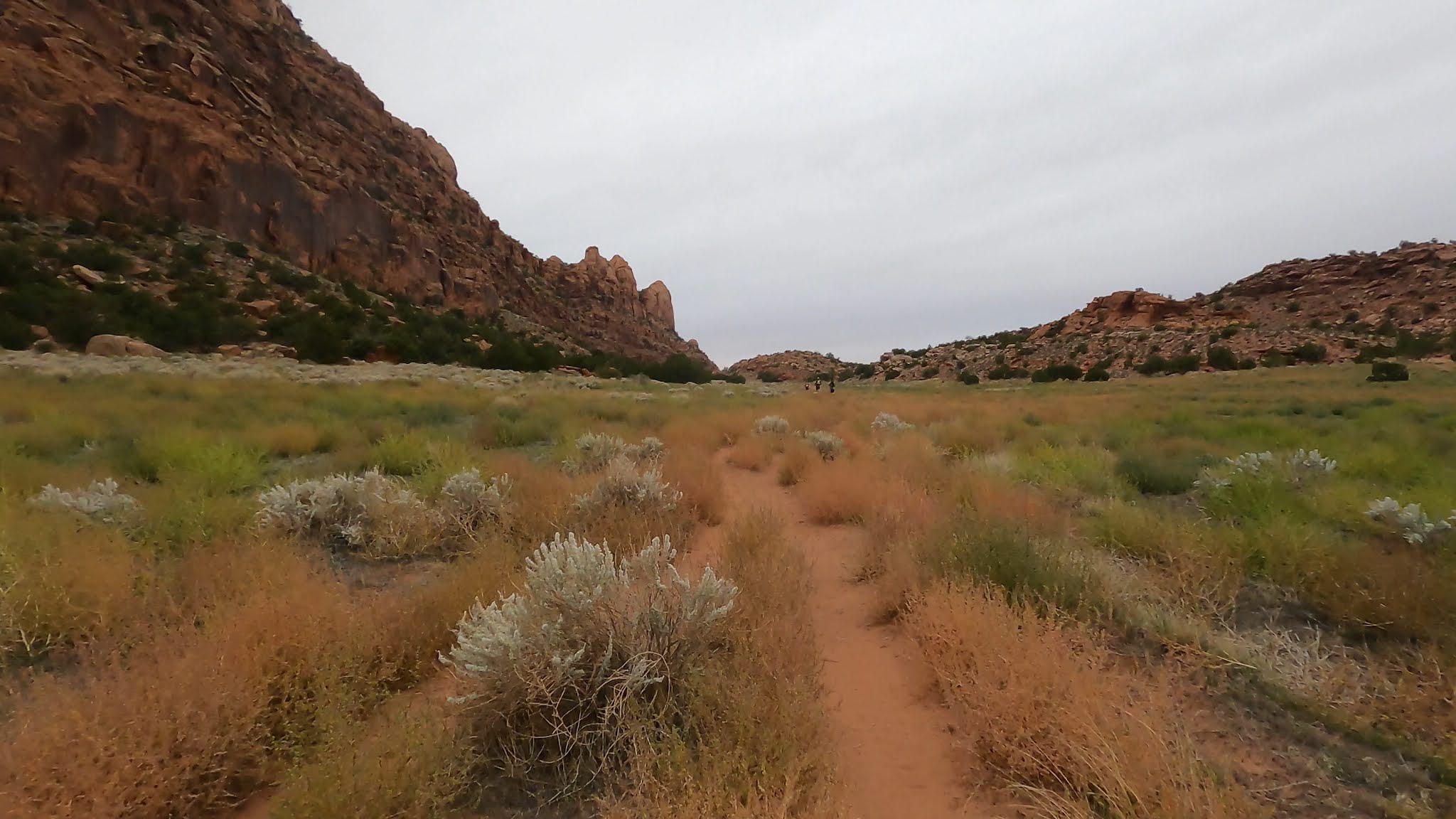 |
| Early section around mile 24. |
Brian walked alongside me as my pace slowed to a shuffle once again. I would walk and then run and then walk some more. Thankfully, we made the final turn to the finish just as the storm arrived in town. In fact, as I shuffled the final quarter mile, I was afraid that the finish line arch may just be gone by the time I get there. The wind gusts were severe and rain started to fall. No matter, I was finally done. When I finally crossed the finish line, I was elated to have finished. I had serious doubts early on, but once I made it past that low point, I never looked back. I am thankful to have had some an amazing crew to support me and I should not fail to mention the amazing crew of volunteers and medical personal, Nicole in particular, who went above and beyond what one would or should expect. I will be forever grateful to all of these peeps whom I now consider family. I still have not processed the enormity of this adventure or the impact it's had on me and continued to have, but I needed to write this report before too much time passes. Clearly, enough time has already passed for me to sign up for more ultra adventures next year.
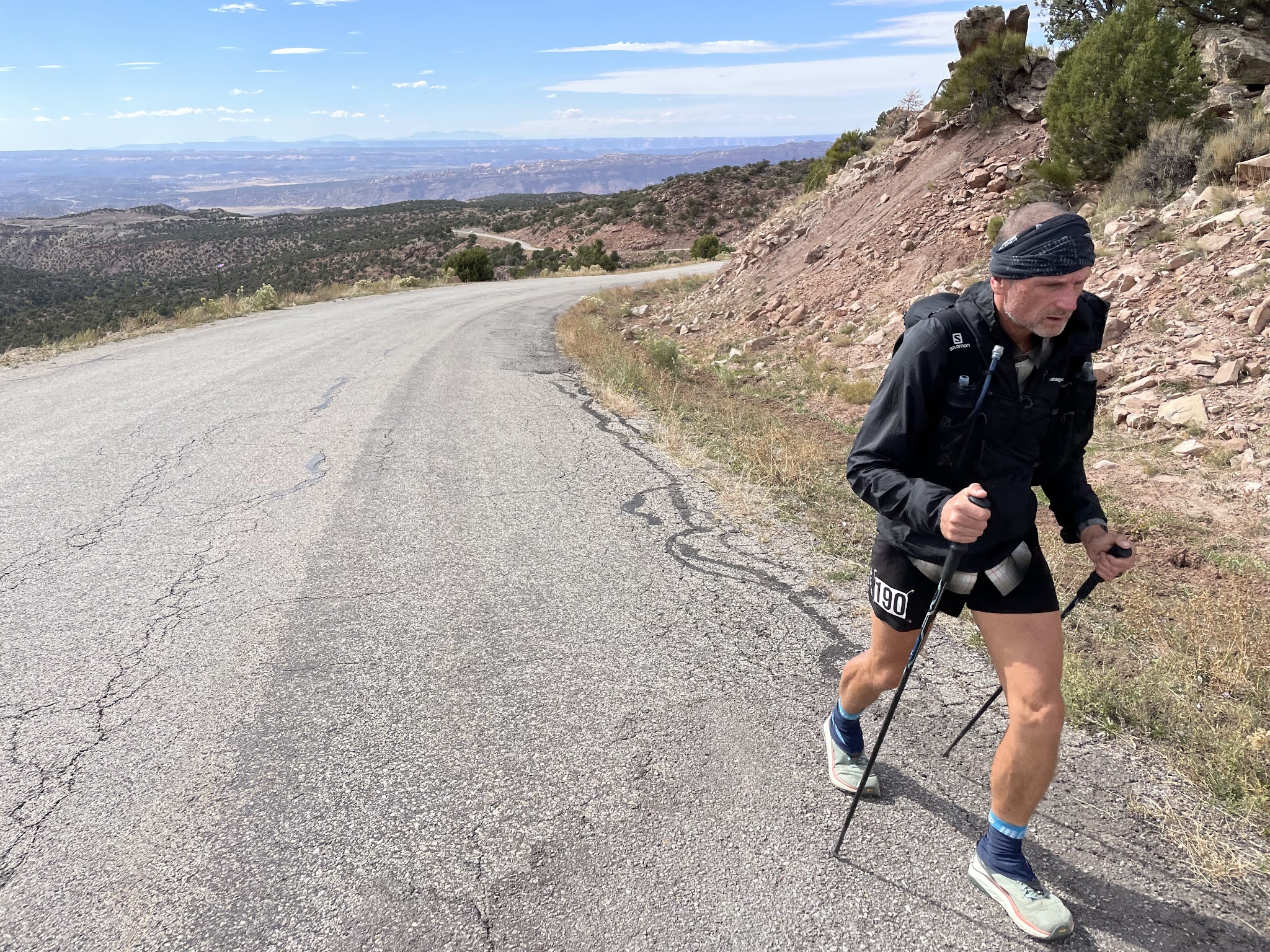 |
| Last major 7 mile road climb, part of the snow reroute, to Horse Creek aid station around mile 208. |
When it was all said and done, it had taken me over 92 hours to cover 240 miles. I slept a total of 4 hours and ate more tortillas than I care to count. This race had it all, challenging weather and challenging terrain ranging from desert to mountains and everything in between. If you've run 100 miles a few times before and maybe wonder whats next, this may be it.


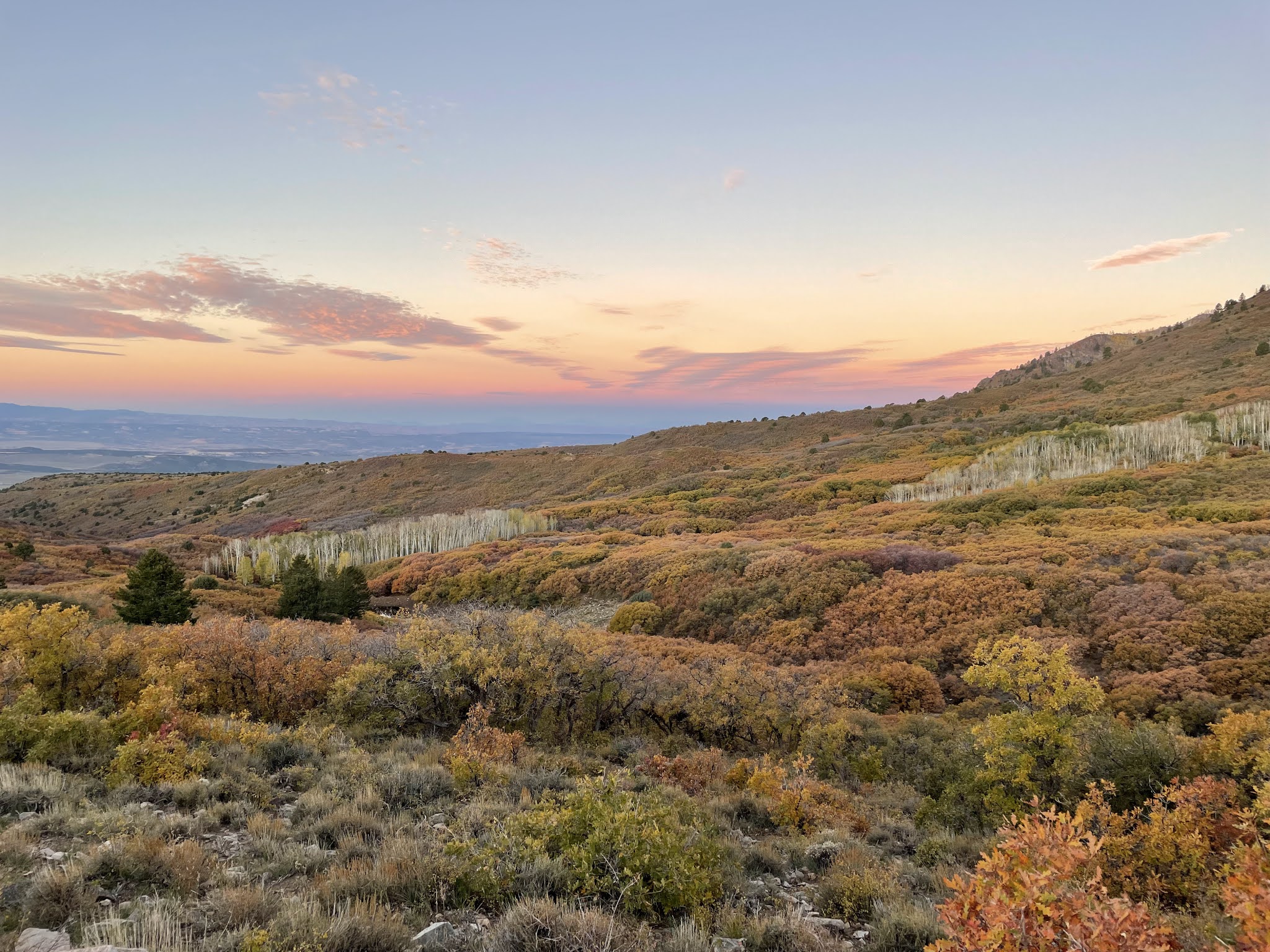 |
| The golden hour just after sunrise during the early stage of our long descent from the Pole Canyon aid station at mile 185. |


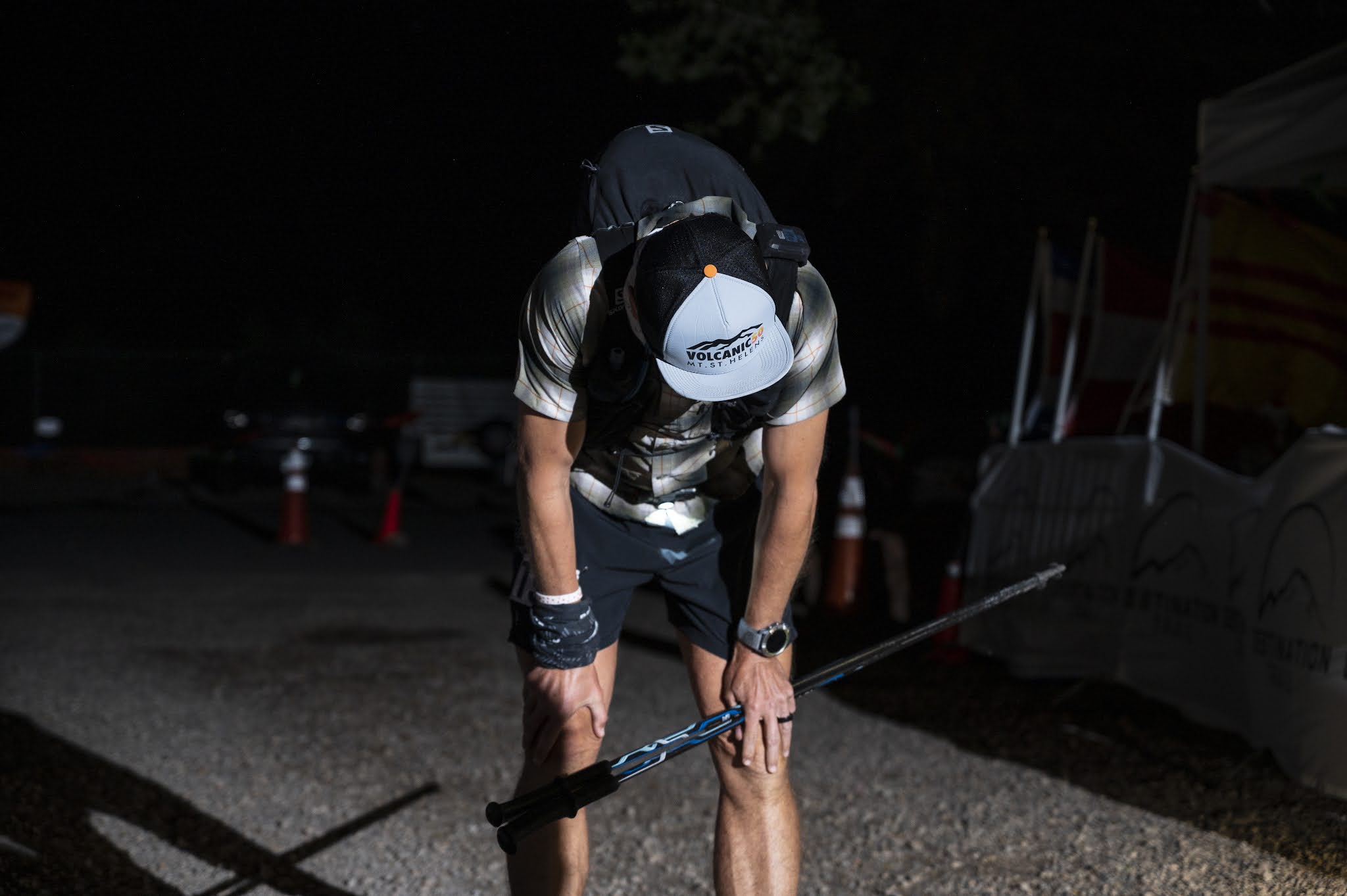 |
| Utterly exhausted and both ecstatic and speechless crossing the finish line of the Moab 240. |
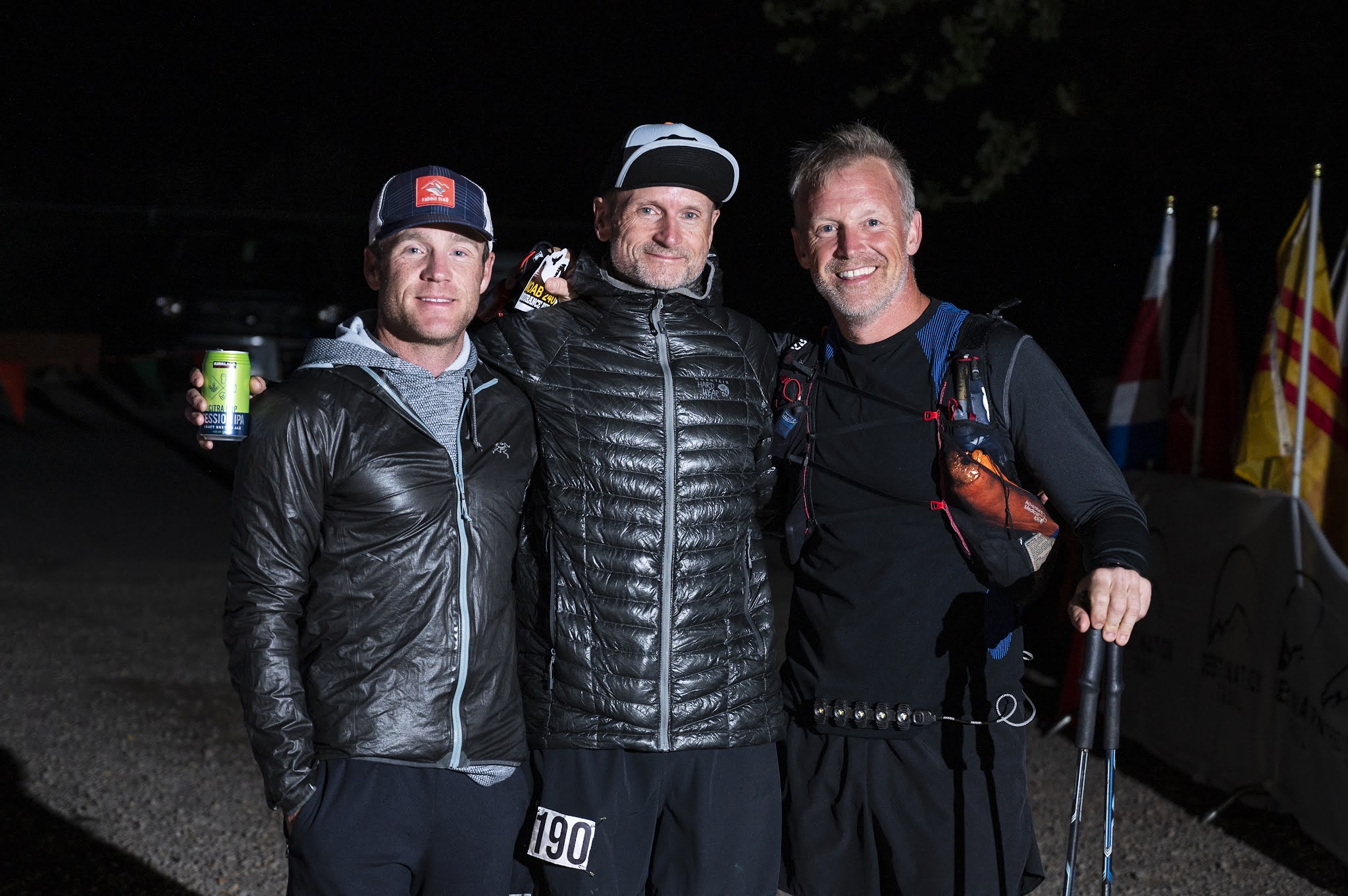 |
| At the finish line with my (unexpected) rockstar crew and pacers Jay Hagan and Brian Baraniak. |


